
Meet William: The Story Behind Project William
Where our story begins
We found out we were expecting our second child with the same mix of joy and quiet nerves that comes with any pregnancy once you already know how much is at stake. We have a daughter and we were so excited to give her a sibling. The early months were uneventful. We felt lucky.
At 10 weeks, we did the standard NIPT (non-invasive prenatal testing). It came back low-risk, and we found out we were having a baby boy.
What we didn’t know then: the standard NIPT screens for Trisomy 21, 18 and 13. It does not screen for microdeletions such as 22q. Expanded NIPT panels are available and can screen for microdeletions, but most parents are never told that options exists. We weren’t.
Something shifted
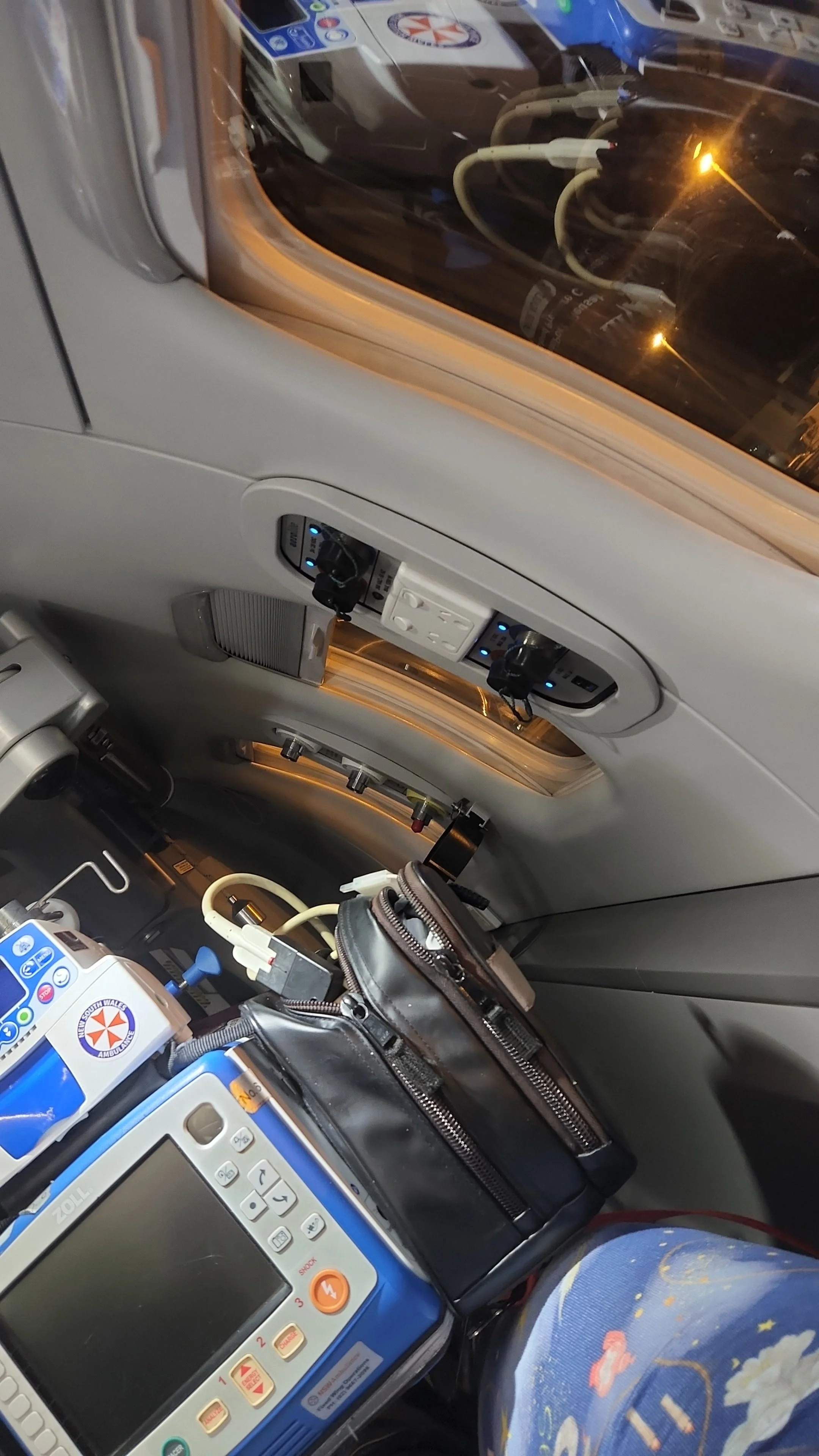
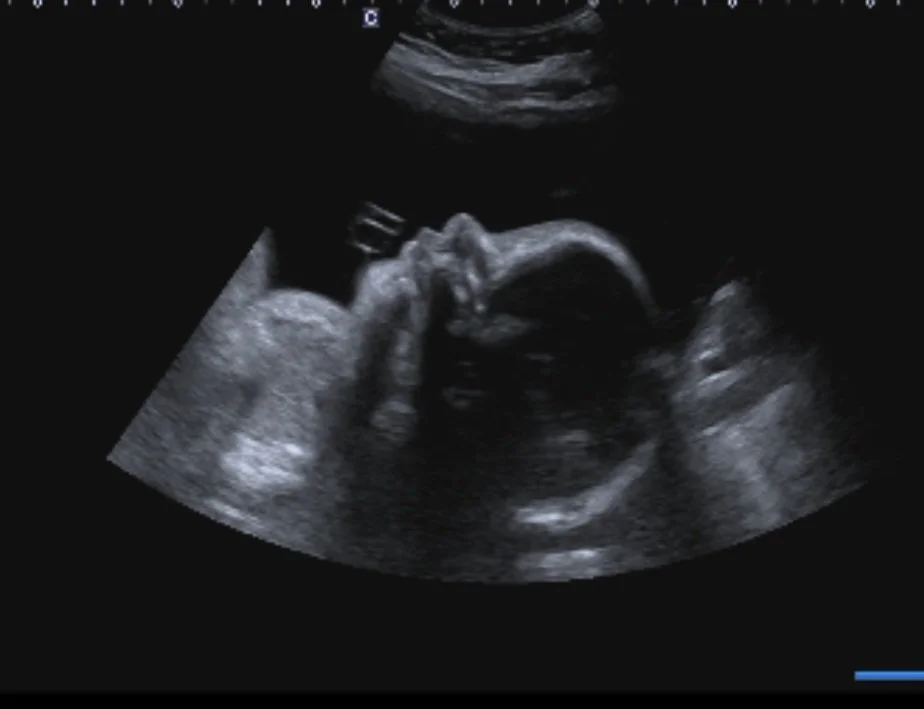
At our 28-week scan, things changed. Our son was measuring large, at the 97th percentile, and my amniotic fluid was elevated: an AFI of 30.4cm against a normal upper limit of around 22.8cm - Polyhydramnios. I’d already passed my glucose tolerance test twice, so there was no easy explanation. Our team scheduled close monitoring, and every scan, every time, looked normal.
At 30 weeks and 5 days I went in for decreased fetal movements. On the CTG monitor I began contracting, and within hours I was half a centimetre dilated. That night I was on a flight to Canberra.
The next week was one of the hardest of my life at the time. Contractions through the night, medication to stop them, two rounds of steroids for his lungs just in case. On the Wednesday, the team performed an amniocentesis and drained 1.25L of fluid. While they had it, they sent some away for genetic testing. I didn’t know then how much that decision would matter.
I came home on the Sunday. The contractions had stopped, and he was head down with no signs of distress. We breathed.
The phone call
At 33 weeks, a genetic counsellor from Canberra Hospital called. A microdeletion at 22q11.21. 22q11.2 deletion syndrome - DiGeorge syndrome. A name we had never heard before, and our son had it.
I read everything I could find in those first hours. Heart defects. Immune function. Cleft palate. Cleft Lip. Feeding struggles. Learning struggles. It’s a condition that presents so differently from person to person, and we had no way of knowing which version our son would be. But none of our ultrasounds had shown a heart defect or a cleft, so we held onto hope. We thought we’d be among the lucky ones. Whatever came would be hard, but fixable and treatable. Tom and I did our own genetic testing to find out whether this was inherited or something that had just happened to our boy.
Meeting William
We were cared for by both Wagga Wagga Base Hospital and Canberra Hospital, with both teams monitoring us constantly. At 33 weeks I developed pre-eclampsia. On 14 June I was admitted to Wagga Base, and I wouldn’t leave until I had our boy.
On 20 June I took a turn. I’d been on the CTG monitor with constant contractions since 10am. By 3pm my pre-eclampsia was becoming HELLP syndrome, a rare and life-threatening pregnancy complication. By 6pm I was on a magnesium sulphate drip to protect my brain, and by 9pm we were having our baby. The whole time, he’d been so happy and unbothered in my belly. I couldn’t wait to meet him.
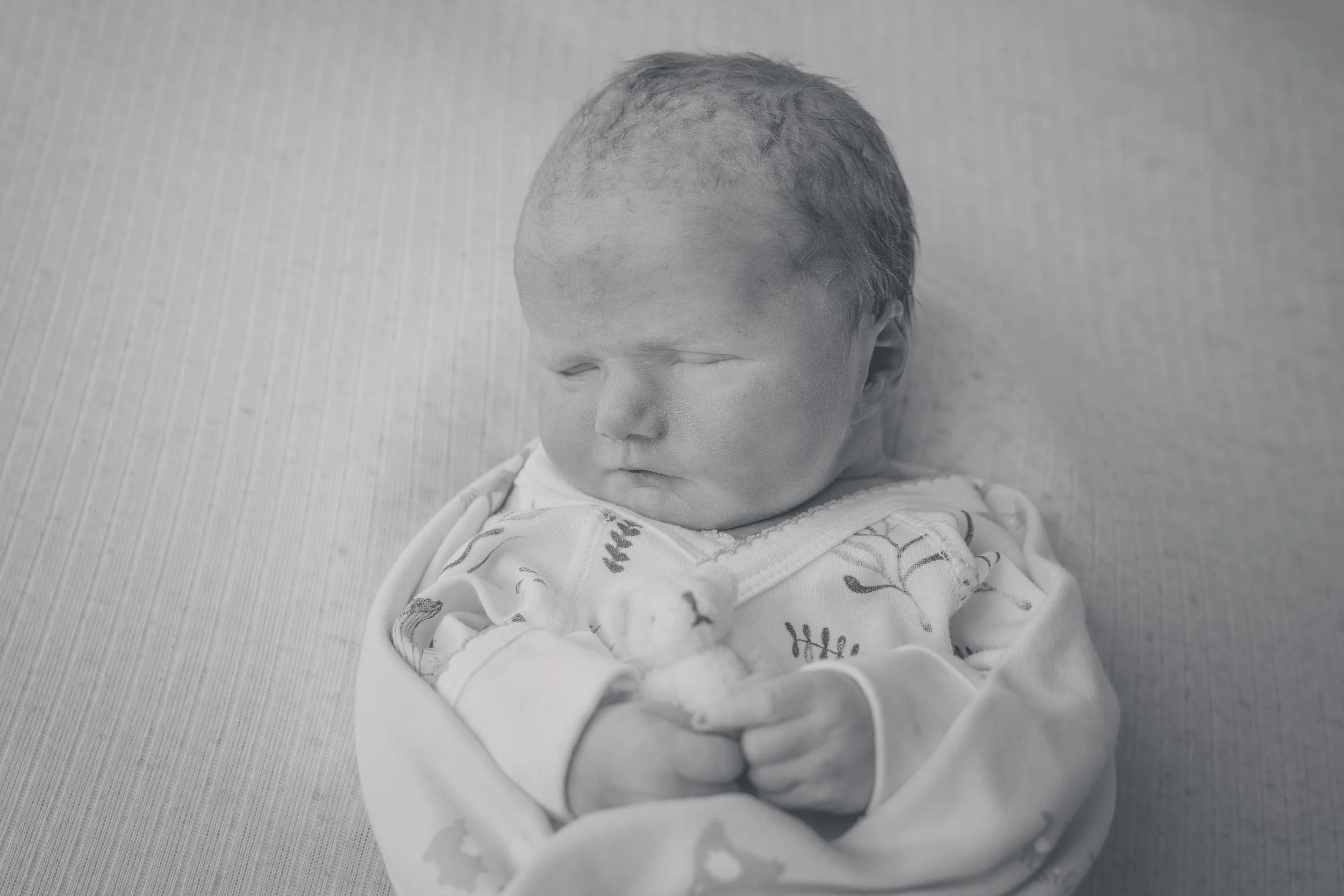
William Patrick Howard was born by emergency c-section on 20 June 2026 at 9:38pm. He weighed 6 pounds 1, was 48cm long and had a full head of hair. He was the most beautiful baby boy I had ever seen. He was perfect.
He never cried, he never took a breath, and he never opened his eyes.
The people who held us
The Hospital
The whole team at Wagga Wagga Base Hospital was amazing through our delivery and the week I was in there. We were so loved and supported. My midwives made sure someone was always with me, and some even changed their shifts to be by my side after we lost William. Our paediatrician did everything she could to help us understand what happened, and she still keeps us updated and supported today.
Thanks to a cuddle cot within the hospital, we got three beautiful days with our boy. We held him, loved him and took lots of pictures.
Vilomah Community
William was born on the Saturday. On the Sunday, two amazing women from Vilomah Community, Megan and Bek, turned up with everything we didn’t know we needed. They brought a professional photographer to capture memories with our boy. They took his handprints, footprints and castings. They gave us resources and a safe space to grieve.
In the days after, they spoke with the funeral home directly to help organise his funeral. On his due date, 30 July, they brought us cupcakes. They still check in on us. We also attend their events to support the Vilomah Community and other loss families.
The photos we received are everything to us. I look at them everyday as a comfort and as proof that our boy was here.
Gidget Foundation
I left hospital on the Tuesday. On the Wednesday, after my mum found them for me, I had a referral to the Gidget Foundation. They provide my grief counselling in person here in Wagga Wagga.
My therapist has taught me it’s okay to feel all the feelings. She has made her room such a safe place to be open, and she even had a photo of William printed and framed for our sessions. She has constantly supported me through this and has always made me feel welcome. I’m forever grateful for the Gidget Foundation.
What we learned after
We consented to a full autopsy and donated tissue samples to assist research into 22q and diagnostic testing. The autopsy confirmed what the team had suspected at birth. William had a severe glottic web between his vocal cords that completely blocked his airway. Nothing could get through, no matter how hard they tried. He was also missing his thymus, the organ that shapes the immune system, and he had a small hole in his heart.
None of these things can be seen on an ultrasound. Our paediatrician and obstetrician told us they’d never seen 22q present so severely.
Three weeks after we lost William, our own genetic results came back. We aren’t carriers. 22q affects around 1 in 4,000 babies, and it just happened to our baby boy de novo.
If you didn't know William had DiGeorge syndrome, you'd never have known anything was wrong. If his samples help diagnostic testing improve, and if that spares another family what we went through, then there is meaning in this loss.
Carrying William with us
William is still very much part of our family.
Maeve talks about William being in the sky. She tells us our loved ones are holding her baby brother. She calls him an astronaut. Maeve tells us baby brother William makes the rainbows we see.
Tom and I both got tattoos for William. Every Saturday, wherever we are, we light a candle for him. On the 20th of every month I post an update on what I think he might be doing if he were here.
Why Project William?
After we lost William, we learned how often babies are lost in Australia. Six babies are stillborn here every day. That number stopped us in our tracks.
Project William exists because we want William's legacy to be change. Everything we do is for our children.
Our biggest hope is simple. We want every pregnant family to know that both a standard and an expanded NIPT exist, and to understand what each one does and doesn't screen for. Longer term, we'd love to see Medicare help cover the cost of NIPT, so the choice isn't limited by what a family can afford. If that happened, it would mean everything.
To the family reading this
We're sharing William's story because we know other families will receive a prenatal 22q diagnosis and feel utterly alone. We couldn't find a single story that began where ours did: in the middle of a pregnancy, with a phone call and a result on a piece of paper. A future suddenly rewritten.
If your child has just been diagnosed with 22q: this is not your fault, and it's not your partner's. Stop and take a breath. This syndrome is so variable, and your child's story does not have to end like ours. Please reach out to the 22q Foundation, speak with a genetic counsellor, and advocate for your child always.
If you're sitting in that hospital room after losing your baby: take the photos. Take the videos. Smell your baby's hair, and remember everything.
If you're a healthcare provider: please talk to your patients about expanded NIPT screening. Let's make sure no family walks this path in the dark.
If our story gives another family something to hold onto in those first devastating days, then William's life reaches even further.
Always wanted, forever loved, our beautiful William Patrick 🤍
